- Understanding Flight Delay Rights Between the US and the EU
- Stay Calm and Gather Information
- Understand When Compensation May Apply
- Request Written Confirmation of the Delay
- Avoid Accepting a Claim Rejection Too Quickly
- How to Submit a Compensation Claim
- Using a Flight Compensation Service
- Common Mistakes That Can Reduce Your Chances
- Special Considerations for Business Travelers
- Why Understanding Your Rights Matters
- Final Thoughts
- FOLLOW MY JOURNEY
- About the Author
Flight delays can quickly turn a well-planned trip into a stressful experience. Whether you are flying from the United States to Europe or returning from the European Union to the US, a significant delay can disrupt connections, business meetings, holidays, and family plans. The good news is that passengers on many transatlantic routes may have rights that entitle them to compensation, assistance, or reimbursement depending on the circumstances.
Understanding what to do when your flight is delayed and knowing whether you qualify for compensation can help you recover some of the inconvenience and unexpected costs associated with travel disruptions.
Understanding Flight Delay Rights Between the US and the EU
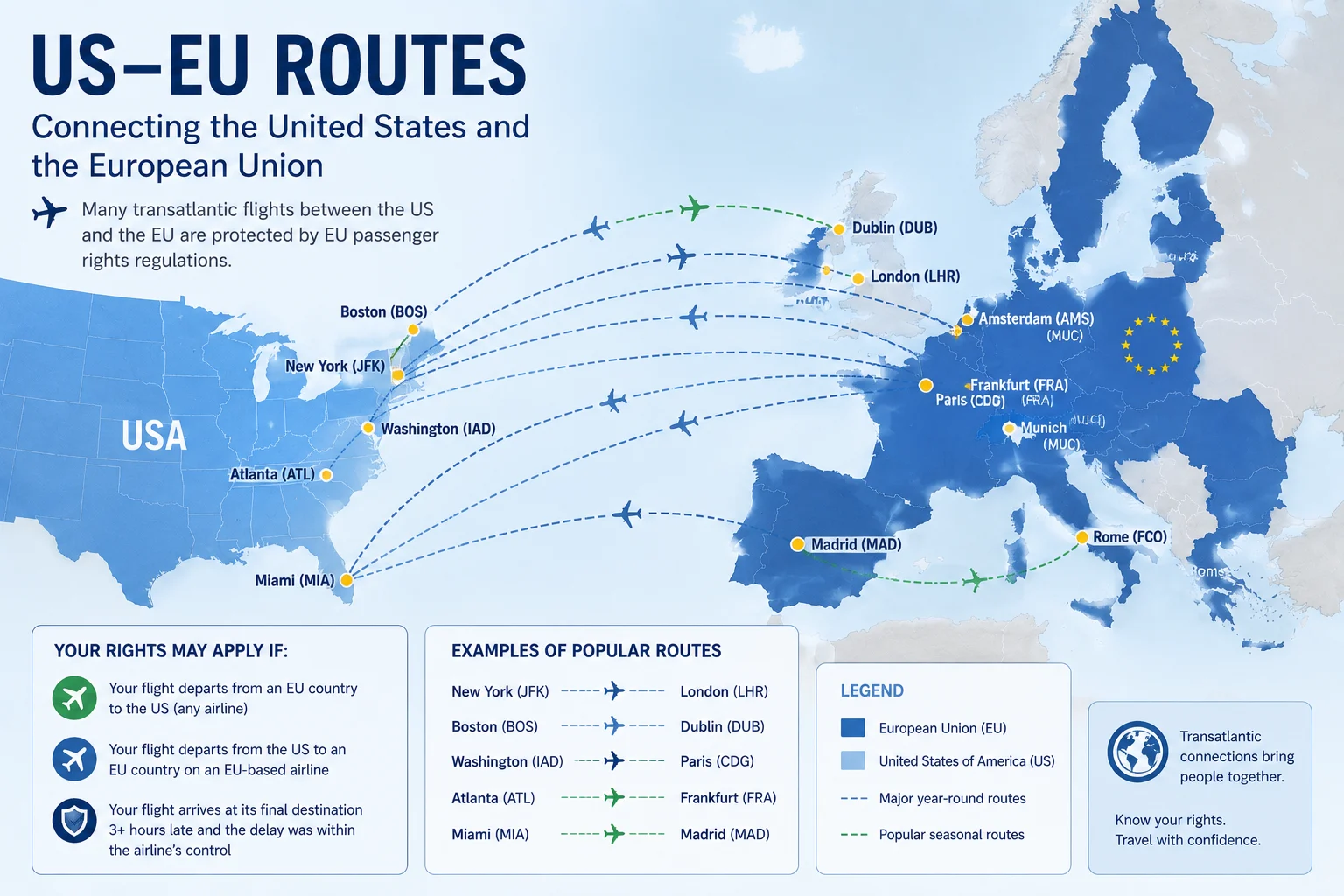
When a flight is delayed, the rules that apply often depend on where the flight departs from, where it arrives, and which airline operates the service.
The European Union has some of the strongest passenger protection laws in the world. Under EU passenger rights regulations, travelers may be entitled to compensation when a flight arrives at its destination several hours late and the delay was caused by circumstances within the airline’s control.
These protections can apply to:
- Flights departing from an EU country to the United States, regardless of the airline
- Flights departing from the United States to an EU country when operated by an EU-based airline
This means that many passengers traveling between Europe and America may qualify for compensation even if they are unaware of their rights.
By contrast, passenger rights in the United States generally focus more on refunds and customer service obligations rather than standardized delay compensation. However, travelers flying on routes covered by European regulations may still benefit from EU protections.
Stay Calm and Gather Information
The first step when a delay occurs is to stay informed.
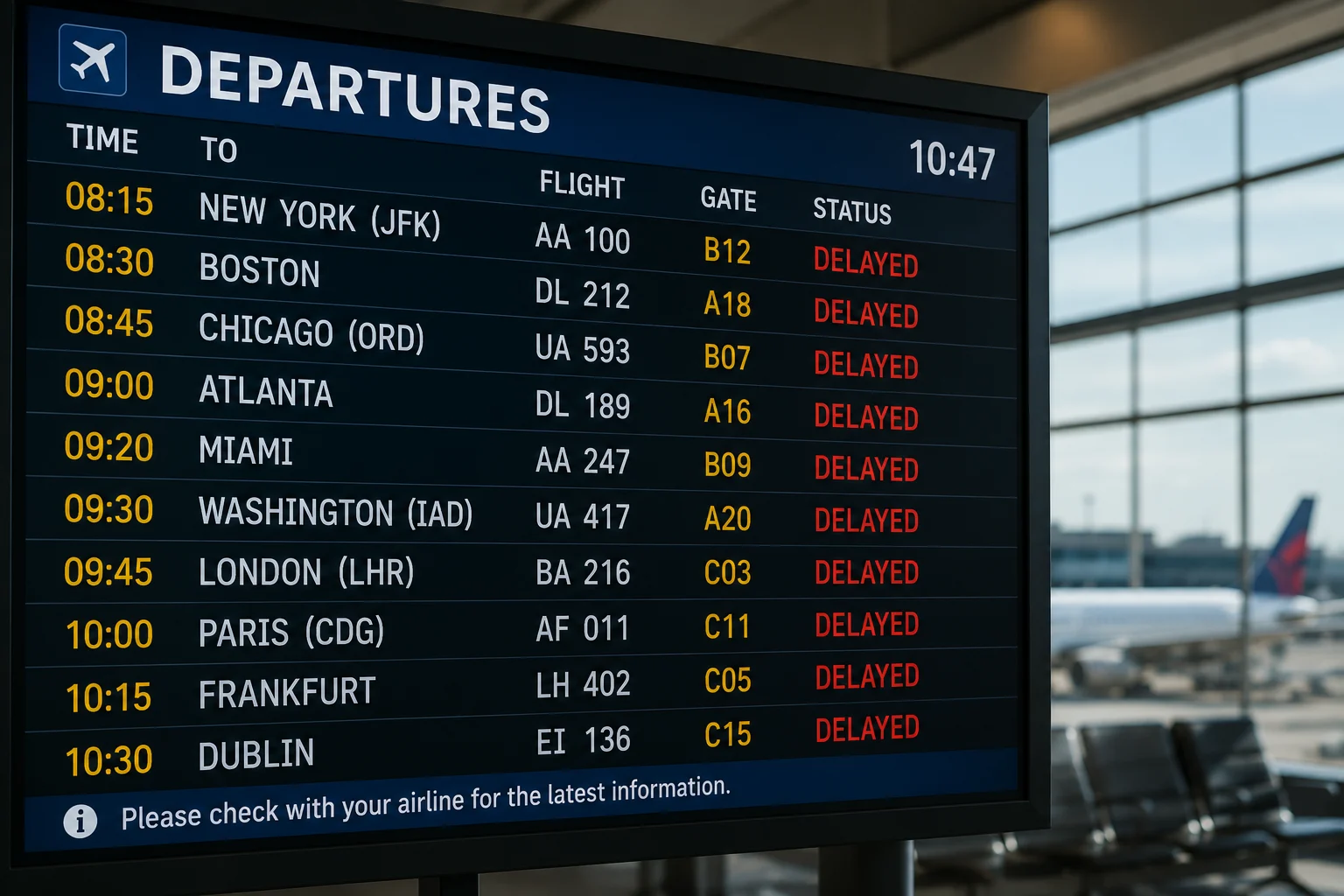
As soon as you learn that your flight is delayed, monitor updates through the airline’s mobile app, airport information screens, email notifications, and text alerts. Delays can sometimes change significantly, either improving or worsening as the situation develops.
Ask airline staff for details about:
- The reason for the delay
- The expected departure time
- Whether alternative flights are available
- Any assistance being offered to passengers
The more information you collect, the easier it may be to determine later whether you qualify for compensation.
Keep All Travel Documents
One of the most common mistakes passengers make is throwing away important documents after a disrupted journey.
Always keep:
- Boarding passes
- Booking confirmations
- E-tickets
- Baggage receipts
- Delay notifications
- Receipts for expenses related to the delay
These documents can serve as evidence if you later decide to submit a compensation claim.
Even screenshots of airline messages and photos of airport departure boards can help support your case.
Know What Assistance You May Be Entitled To
Under European passenger rights rules, airlines must often provide care and assistance during lengthy delays.
Depending on the duration of the delay and the distance of the flight, passengers may be entitled to:
- Meals and refreshments
- Access to communication services
- Hotel accommodation if an overnight stay becomes necessary
- Transportation between the airport and hotel
If the airline fails to provide these services, keep receipts for reasonable expenses. You may be able to seek reimbursement afterward.
It is important to remain reasonable with spending. Excessive or luxury purchases may not be reimbursed.
Understand When Compensation May Apply
Not every delay qualifies for compensation.
Generally, compensation may become available when:
- The flight arrives at its final destination at least three hours late
- The delay was caused by circumstances within the airline’s control
- The flight falls under applicable European passenger protection rules
Examples of situations that may qualify include:
- Operational problems
- Crew scheduling issues
- Certain technical faults
- Aircraft rotation problems
However, compensation is typically not available when delays are caused by extraordinary circumstances beyond the airline’s control.
These may include:
- Severe weather
- Air traffic control restrictions
- Security threats
- Political instability
- Airport closures
Each case is assessed individually, and airlines often investigate the exact cause before making a determination.
Compensation Amounts Can Be Significant
For eligible flights between the US and the EU, compensation can potentially reach several hundred euros per passenger depending on factors such as flight distance and the length of the delay.
Because transatlantic routes cover substantial distances, compensation amounts can be meaningful for affected travelers.
Importantly, compensation is generally separate from reimbursement for meals, hotels, or transportation expenses. In some situations, passengers may be entitled to both.
Families traveling together may also be able to submit claims for multiple passengers, increasing the total compensation available.
What About Missed Connections?
A delayed flight can trigger a chain reaction of travel problems.
If your first flight is delayed and causes you to miss a connecting flight booked under the same reservation, you may still have rights.
The key factor is often the arrival time at your final destination rather than the delay of an individual flight segment.
For example, a relatively short delay on the first leg of a journey may result in a much longer delay upon arrival because of a missed connection.
In some situations, compensation may still be available if the final arrival delay exceeds the required threshold and other eligibility requirements are met.
Request Written Confirmation of the Delay
Whenever possible, ask the airline for written confirmation of the delay.
Many airlines can provide documentation showing:
- Flight number
- Scheduled departure time
- Actual departure time
- Delay duration
- General cause of the disruption
This information can be extremely useful when preparing a compensation claim.
If written confirmation is unavailable, save all electronic communications and travel records.
Avoid Accepting a Claim Rejection Too Quickly
Passengers are sometimes told that they are not entitled to compensation without receiving a detailed explanation.
If your claim is rejected, carefully review the airline’s reasoning.
Ask for clarification regarding:
- The specific cause of the delay
- Why compensation was denied
- Whether the airline considers the event an extraordinary circumstance
Not all rejections are necessarily final. Additional evidence or further review may sometimes produce a different outcome.
Understanding the exact reason for the denial can help you decide whether to continue pursuing the claim.
How to Submit a Compensation Claim
The compensation process usually begins with a formal claim submitted to the airline.
You will typically need to provide:
- Passenger information
- Flight details
- Booking reference
- Description of the delay
- Supporting documentation
Many airlines offer online claim forms that simplify the process.
Be sure to provide accurate information and include all relevant evidence. Missing documentation can slow down the review process.
Keep copies of everything you submit and maintain records of all correspondence.
The compensation process usually begins with a formal claim submitted to the airline.
You will typically need to provide:
- Passenger information
- Flight details
- Booking reference
- Description of the delay
- Supporting documentation
Many airlines offer online claim forms that simplify the process.
Be sure to provide accurate information and include all relevant evidence. Missing documentation can slow down the review process.
Keep copies of everything you submit and maintain records of all correspondence.
Using a Flight Compensation Service
Some travelers prefer not to handle the claims process themselves.
Specialized companies such as AirHelp assist passengers by reviewing flight details, assessing eligibility, and managing claims on their behalf.
These services can be particularly useful when:
- The airline rejects a claim
- The case is complex
- The passenger lacks time to manage the process
- Multiple passengers are involved
Such services typically charge a fee if the claim succeeds, so travelers should understand the terms before proceeding.
For many passengers, however, the convenience and expertise can make the process easier.
Common Mistakes That Can Reduce Your Chances
When dealing with a delayed flight, avoid these common errors:
Throwing Away Documents
Always keep travel records until the matter is fully resolved.
Failing to Save Receipts
Without receipts, reimbursement requests become much harder to prove.
Waiting Too Long
Different jurisdictions may have different deadlines for submitting claims. Acting promptly is usually beneficial.
Assuming You Are Not Eligible
Many travelers incorrectly believe they have no rights when compensation may actually be available.
Accepting Verbal Information Only
Whenever possible, obtain written evidence regarding the delay and its cause.
Special Considerations for Business Travelers
Business travellers often face additional losses when flights are delayed.
Missed meetings, conferences, and events can create significant inconvenience. While compensation rules generally focus on the travel disruption itself rather than business losses, affected travelers should still preserve records of all travel-related expenses.
Companies may also have internal travel insurance policies that provide additional protection beyond airline compensation.
Why Understanding Your Rights Matters
Millions of passengers experience flight delays every year, yet many never pursue compensation simply because they do not know their rights.
Receiving flight delay compensation in the US can sometimes create confusion because American passenger protections differ from European rules.
However, many flights operating between the United States and the European Union may still qualify for compensation under European passenger rights regulations depending on the route and airline involved.
Being informed allows travelers to make better decisions during disruptions and increases the likelihood of a successful claim.
Final Thoughts
A flight delay between the US and the EU can be frustrating, expensive, and disruptive. Fortunately, passengers on many transatlantic routes may have legal rights that provide compensation, reimbursement, and assistance when delays occur.
The most important actions are to remain informed, keep all travel documents, save receipts, record details of the disruption, and understand whether your flight falls under applicable passenger protection regulations.
If you believe you qualify, submit a claim directly to the airline or consider using a specialist service such as AirHelp to assist with the process. Taking the right steps immediately after a delay can significantly improve your chances of receiving the compensation and support you deserve.
FOLLOW MY JOURNEY

About the Author
Josh Cahill is an award-winning Aviation YouTuber who is reportedly one of the most-watched flight reviewers on the internet. He organised Afghanistan’s first all-female flight together with Kam Air in February 2021 on a flight from Herat to Kabul for which he received the Aviation Achievement Award. His favourite hobby? Flying exotic airlines nobody has ever heard of.